DORA performance
Why it matters
Tracking DORA metrics is only the first step knowing your deployment frequency or change failure rate doesn't tell you whether it's good enough. Without codified thresholds, teams interpret their own numbers differently: one team's "acceptable" lead time is another team's red flag. DORA scorecards turn raw metrics into graded maturity levels, making it clear which teams are Elite, High, Medium, or Low performers and where to focus improvement efforts.
How Port helps
Port's DORA scorecards evaluate every service and team against the four DORA metrics using Bronze, Silver, and Gold maturity levels. Scores update in real time as deployment, PR, and incident data flows in from your integrations. Each metric maps to a scorecard rule with configurable thresholds so you can start with industry benchmarks and adjust to your organization's targets. Dashboards show compliance across teams, making it easy to identify which groups need support and which are setting the standard.
Example scenario
A Director of Engineering wants to move all teams from "Medium" to "High" DORA performance within two quarters. They set up DORA scorecards in Port with thresholds aligned to the DORA research benchmarks: Gold requires daily deployments, lead time under one day, CFR below 5%, and MTTR under one hour. The initial scorecard shows 3 of 12 teams at Gold, 5 at Silver, and 4 at Bronze. Teams with Bronze scores drill into their scorecards to see which specific metrics are dragging them down two teams discover their lead time is inflated by long review cycles, while another finds their CFR is high due to missing integration tests. Each team targets their weakest metric, and within 8 weeks, Bronze teams drop to one.
Example dashboard
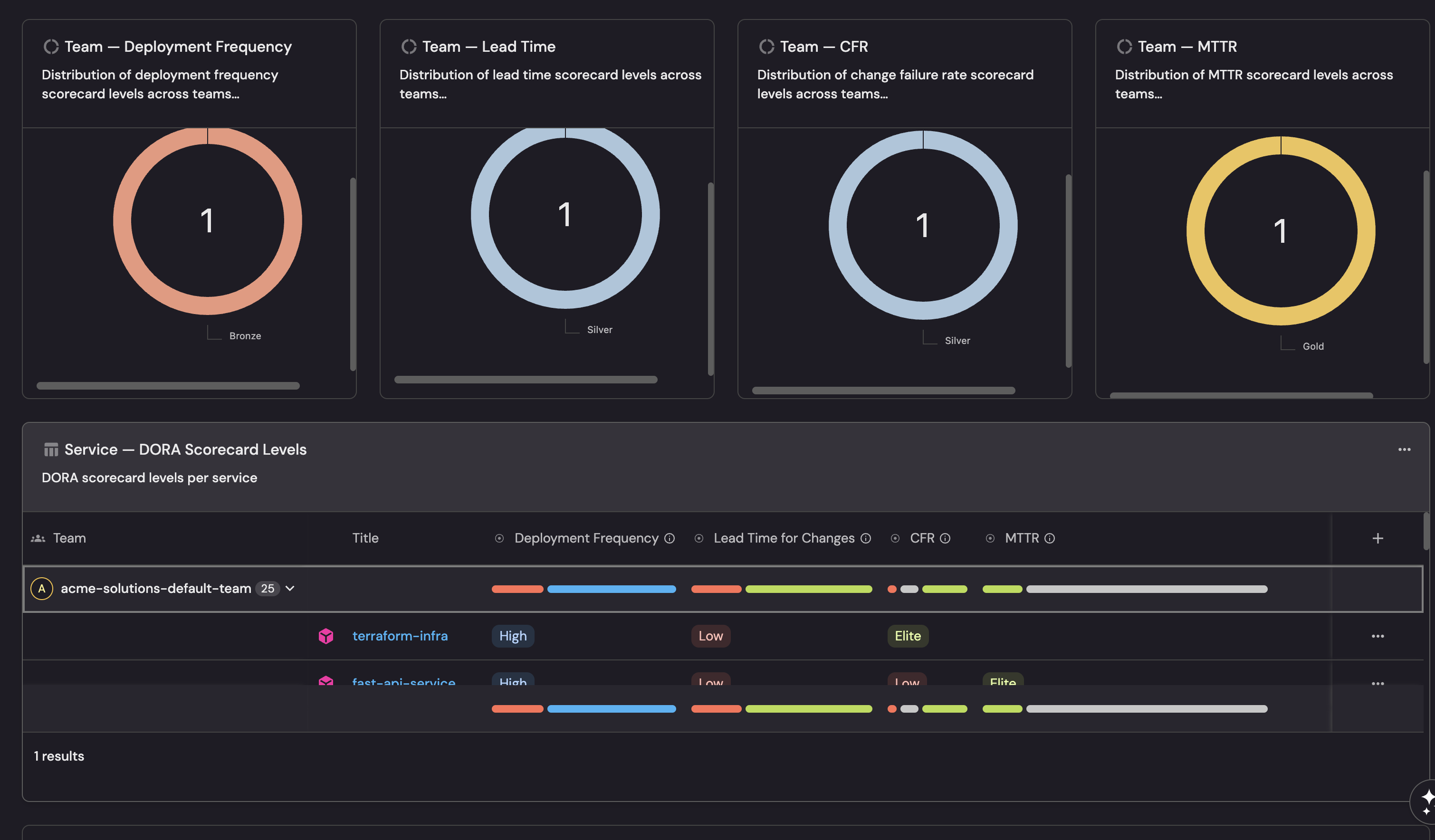
Example DORA scorecards dashboard based on Setup DORA scorecards guide.
Follow the recommended guides below to implement this use case.